
In the final episode of LearnLinuxTV’s Proxmox VE tutorial series, we explore the concept of high availability. This will ensure that our most important virtual machines are always running, even if one of the nodes in our cluster stops responding.

⇨
see all
In the final episode of LearnLinuxTV’s Proxmox VE tutorial series, we explore the concept of high availability. This will ensure that our most important virtual machines are always running, even if one of the nodes in our cluster stops responding.
LearnLinuxTV’s Proxmox full course aims to get you up to speed with all the finer points of Proxmox Virtual Environment. In video #12, we take a look at the Command-Line interface. The basics of both the qm and pct commands are covered, so by the end of the video you’ll be able to manage your cluster with or without a user interface.
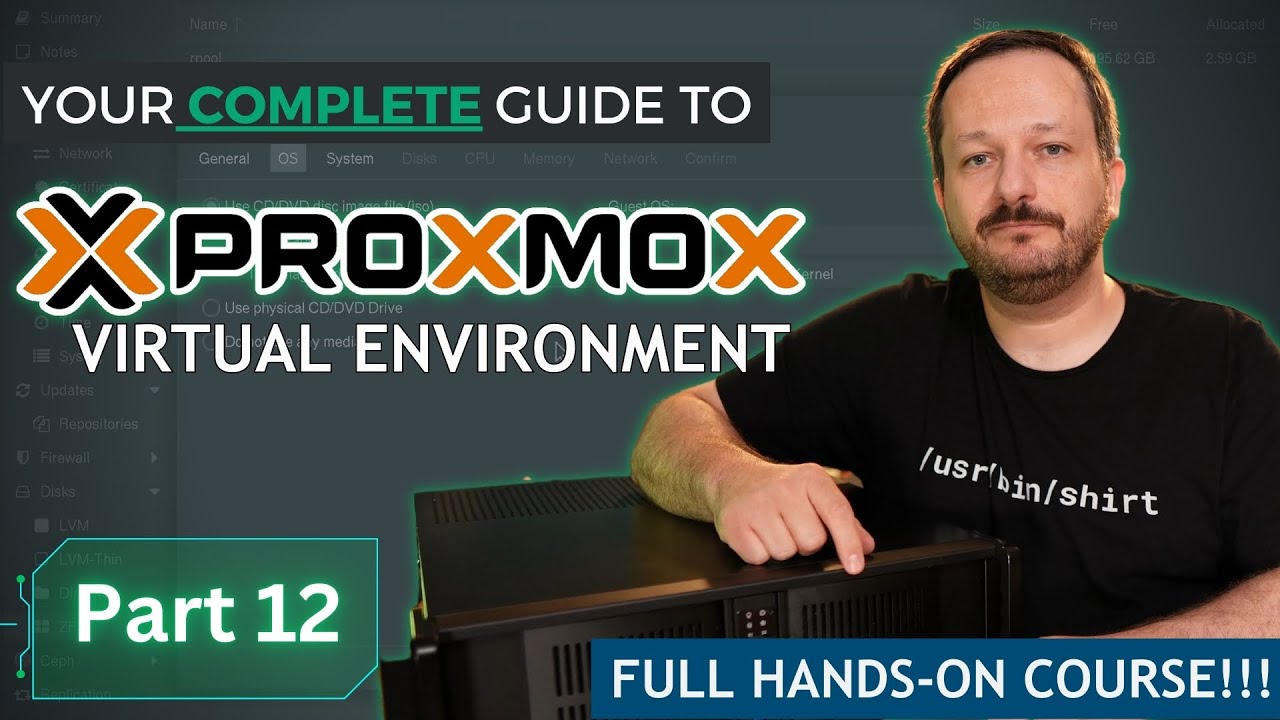
Welcome back to LearnLinuxTV’s full course on Proxmox Virtual Environment! In class #9, we’ll look at how user management is structured, and we’ll walk through the process of creating several accounts. Also, we’ll take an initial look at groups and permissions as well.

The Turing Pi is an awesome Mini-ITX board that allows you to slot up to 7 Raspberry Pi compute modules and have them each share the same ethernet cable and power supply. It’s great for Homelab and testing out things like containers. This is the first video featuring the Turing Pi, more to come! Let me know if you’d like to see tutorials for the Turing Pi.

Have you ever wanted to create a wide-open file share on your LAN to enable your users to quickly and easily share files? In this video, the viewer is shown the process of setting up a custom Samba implementation on Debian/Ubuntu that makes sharing files on your LAN easy.

Kubernetes is a very powerful platform to scale your applications, and the Raspberry Pi is a low-cost computer with excellent power efficiency you can use to run tasks without breaking the bank. Canonical recently released Ubuntu 20.04, with full support for the Raspberry Pi. In this video, we take a look at how to create a Pi-powered Kubernetes cluster based on Ubuntu.

Following up on my low-energy FreeNAS build, here’s another server build – this time for virtualization. In this video, you’ll see the process of building a low-energy Proxmox server, and just like the last build – this one uses only around 55 watts!
