System76 has released a brand-new Linux laptop, which it claims to be a “multitasking concerto”. The brand-new 2022 Kudu features an AMD Ryzen CPU, Nvidia graphics, and even a removable battery! In this video, Jay reviews the new System76 Kudu and gives you his thoughts.
The popular LearnLinuxTV guide to setting up your own cloud with Nextcloud has been freshly updated for 2022! In this video, Jay will walk you through setting up an Ubuntu server for use with Nextcloud. In this tutorial, you’ll be walked through the process of installing Nextcloud, setting up a TLS cert, implementing online document editing, and more!
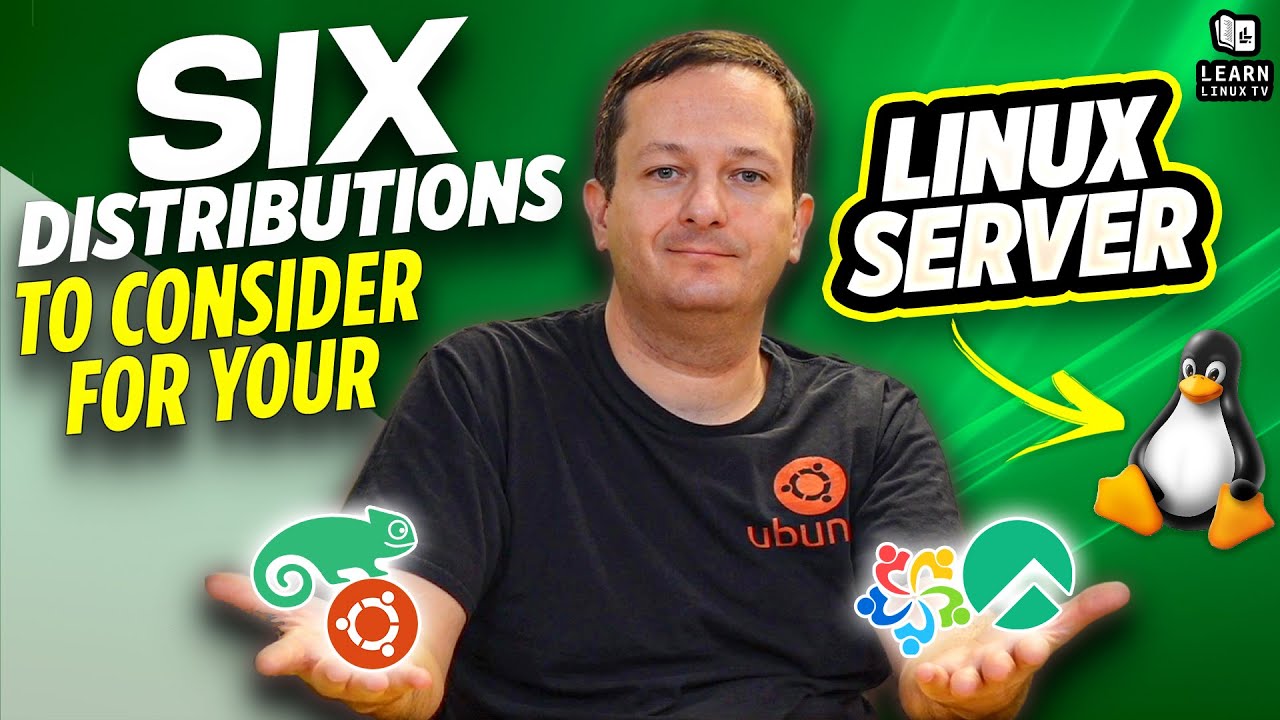
In the Linux community, there’s constant debate about which distribution is best for your desktop. However, there’s not as much discussion regarding Linux distros for your server. There are many good options for your Linux server project, and in this video Jay discusses his top 6 choices.
Having a dashboard installed on your Linux server can be a great way of enhancing remote management capabilities, as well as getting an overview of its resource usage. In this video, I’ll show you Cockpit which is an awesome management system you can install very easily.
In this video, Jay provides a quick review of the Pico PC from XDO, which is the smallest Linux PC that’s ever been reviewed on the channel. The Pico PC claims to be ultra quiet and fully compatible with Linux. Check out this review and find out if the Pico PC lives up to its claims.
When you need to run Linux commands with elevated privileges, sudo is the tried and true method to run commands as another user (such as root). In this introductory tutorial, we’ll take a look at some of the inner-workings of sudo.
There’s no shortage of monitoring tools available for Linux servers and workstations, but htop is a a classic. By installing htop, you can see an overview of your resource usage, including meters for CPU, RAM, Swap, and more. In this video, I’ll give you an overview of htop.
The Turing Pi 2 is quite an exciting project that might even be a game-changer when it comes to homelab. With it, you can set up Raspberry Pi Compute Modules as individual servers, and even cluster them! The Turing Pi 2 gives you access to many additional features that Compute Modules wouldn’t normally have access to, such as mPCIe, SATA, and more. This gives you access to build a data-center in a box, and Jay gives it a first-look on the channel in this video.
In various tutorials throughout the history of LearnLinuxTV, we’ve gone over the importance of using public keys with OpenSSH. But what do you do when you have multiple clients you work with, how do you manage keys between them? In this video, we’ll go through an example scenario where we have three clients, and we need to maintain multiple SSH keys for each.
When creating a deployment image or template for distributing Linux to devices or servers, it’s a good idea to make sure that you reset the host keys for SSH. In this video, I’ll show you an easy method I found for automating this.
You can find the systemd unit file I used in the video here.