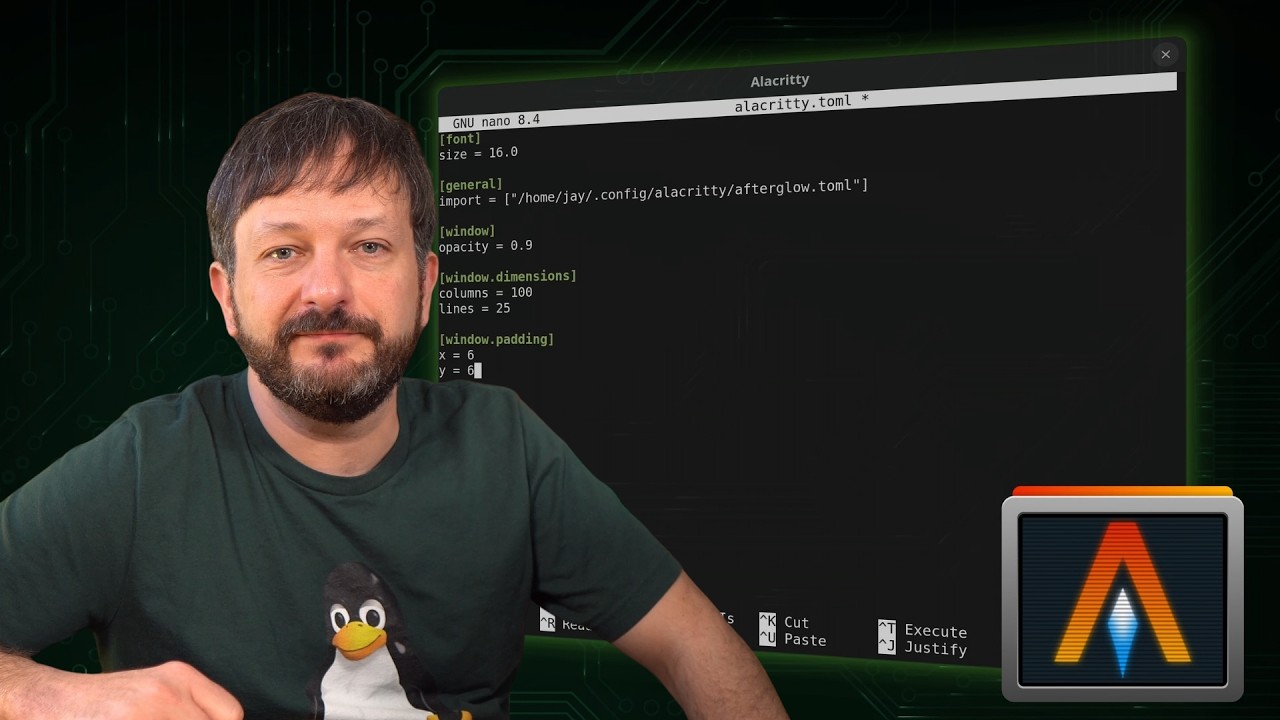
Alacritty is a blazing fast, GPU-accelerated terminal emulator for Linux — and in this guide, I’ll show you how to install and configure Alacritty step-by-step.
If you’re looking to upgrade your Linux terminal setup, this tutorial walks through everything you need to know: what makes Alacritty different, how its configuration works, and how to customize it.
Want to show system information at login in Linux—without relying on neofetch? In this hands-on Linux project, you’ll build a custom Message of the Day (MOTD) that displays live system info every time you log in.
This video is designed as a learn-by-doing Linux project. You’ll write a Bash script, create a systemd service, and set up a systemd timer to automatically regenerate your MOTD. By the end, you’ll have a clean, professional login message that works across reboots and logins—no manual commands required.
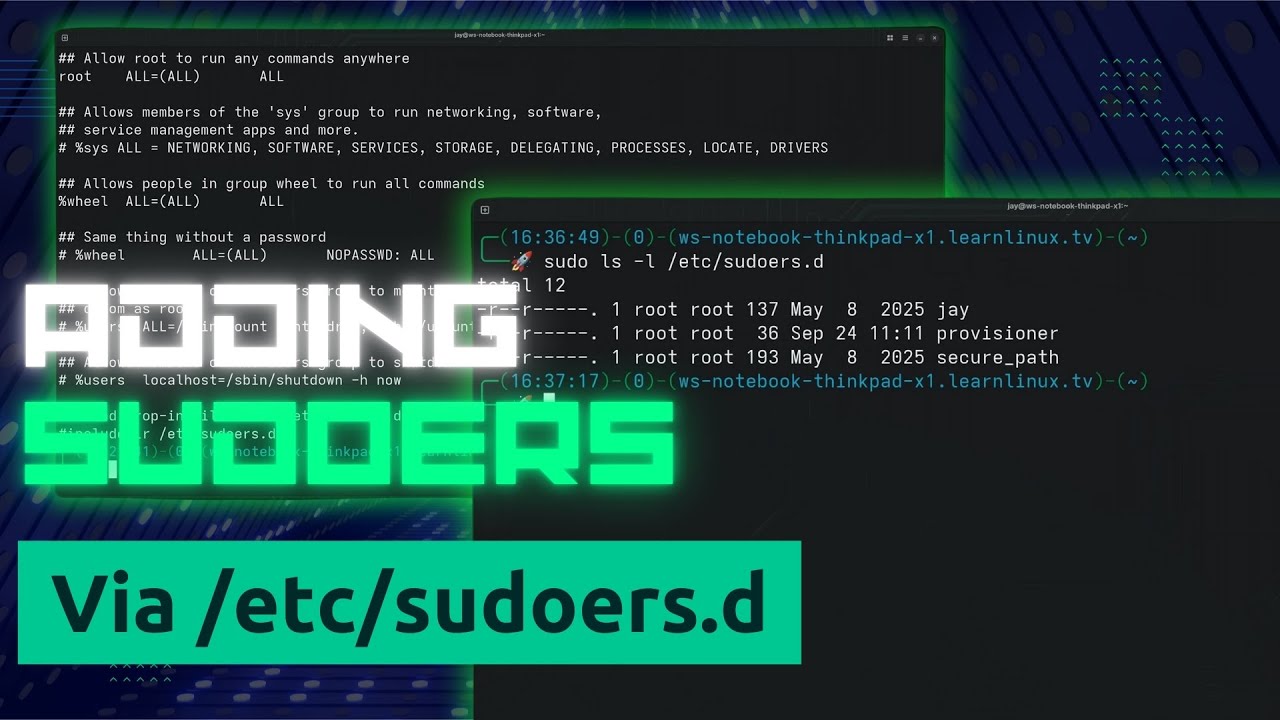
Learn how to properly add sudo users in Linux using the /etc/sudoers.d directory – the recommended best practice method for managing sudo access and user privileges.
In this Linux sudo tutorial, I’ll show you the safe and professional way to grant sudo permissions to users without directly editing the /etc/sudoers file. This method reduces the risk of configuration errors and makes sudo management cleaner and more organized.
Learn how fast and simple it is to use RamNode in this beginner-friendly cloud hosting tutorial designed for anyone exploring new VPS hosting options or looking for an alternative to larger cloud providers like DigitalOcean, Vultr, or Linode or even as a lightweight alternative to AWS. This walkthrough shows how to create a RamNode account, deploy your first Ubuntu VPS, connect to your server, and navigate the RamNode Cloud Control Panel with ease. It also highlights essential features such as snapshots for quick backups, firewall rules for secure access control, cloud volumes for flexible storage, and core server management tools that help new VPS users get started confidently.
Whether you’re launching your first Linux server, comparing VPS providers, or searching for affordable, developer-friendly cloud hosting, this step-by-step guide offers a clear look at RamNode’s performance, simplicity, and streamlined workflow. Perfect for beginners, homelab fans, and anyone exploring VPS hosting.
This video was sponsored by RamNode. Check them out and develop, deploy, and grow your project or business on their OpenStack-based cloud platform. Check them out and use promo code “LEARNLINUXTV” to set up a free trial and get $5 in starter credit!
Learn how to set up and configure a ThinLinc cluster on Linux in this complete step-by-step tutorial. This guide covers everything from downloading the ThinLinc server package to configuring master and agent nodes for a fully functional remote desktop cluster.
Thanks to Cendio/ThinLinc for sponsoring today’s video! Check out their awesome remote desktop solution here.
The Linux Crash Course series teaches you an important Linux command or concept in every video, and you can watch each episode in any order. This time around, Jay explains the touch command.
With Broadcom massively increasing its costs, many organizations decided to look at alternatives. OpenStack is one such alternative – it’s an open-source private cloud solution that’s trusted in data centers all over the world. In this video, Jay will show you the process of migrating a virtual machine from VMware ESXi to OpenStack.
This content is sponsored by OpenMetal, a leading provider of hosted private cloud built on OpenStack and Ceph. OpenMetal helps businesses transition from VMware to OpenStack with ease. Click this link to learn more and explore a live demo of their cloud platform.
Learn Linux TV’s full course on Netdata will teach you everything you need to know to install, use and fully benefit from Netdata! In this final episode we’ll go over a course recap, and then dive into best practices.
Thanks so much to Netdata for sponsoring this course! Check them out for free and enhance your server monitoring.
Learn Linux TV’s full course on Netdata will teach you everything you need to know to fully engage with Netdata and deploy it within your environment. This time around it’s all about the stats – we’ll explore the concept of troubleshooting.
Thanks so much to Netdata for sponsoring this course! Check them out for free and enhance your server monitoring.