Is AI actually useful in Linux — or is it just a gimmick?
Sloppix is a brand new Linux distro with AI features baked right in — terminal assistance, automated sysadmin tasks, and more. So I put it to the test.
But by the end, there’s a bigger question worth asking: AI is being bolted onto every tool, every distro, and every workflow in the Linux space right now — and a lot of it is AI slop dressed up as innovation. It’s worth stopping to think about what we’re actually gaining, and what we’re losing when we let AI do the thinking for us.
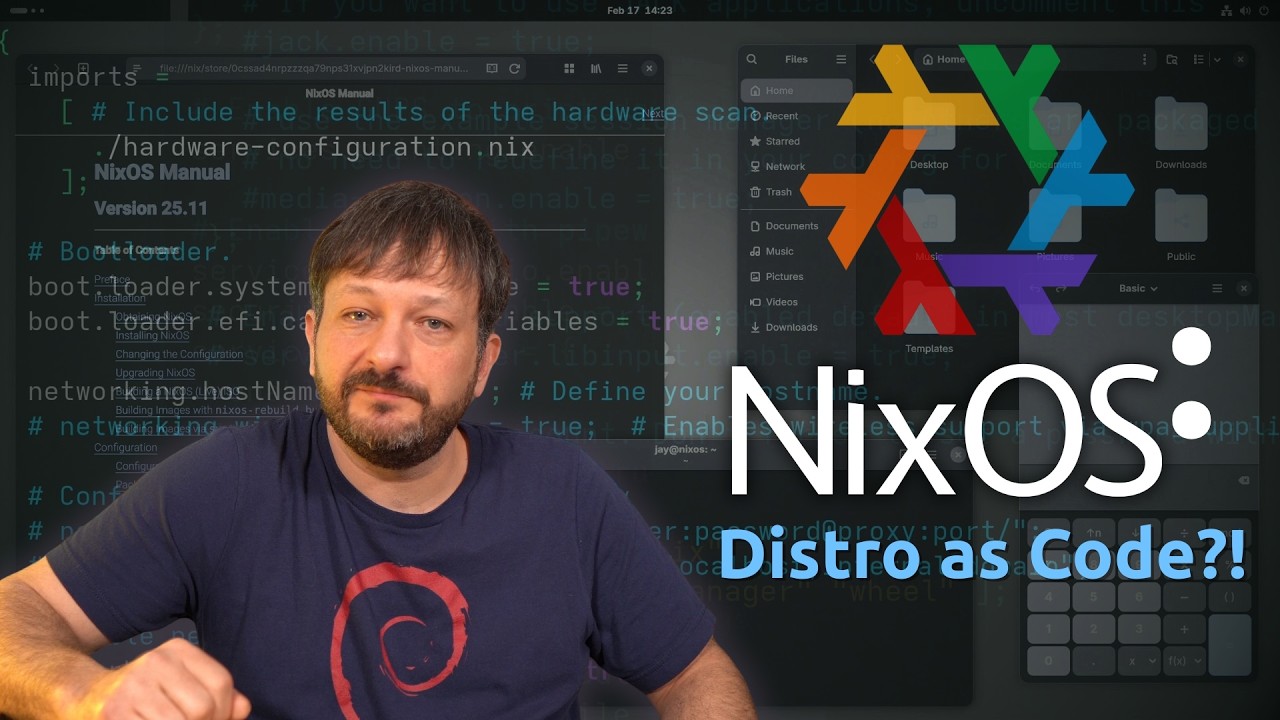
In this in-depth NixOS review, we’ll explore what makes NixOS fundamentally different from traditional Linux distributions. From declarative configuration to fully reproducible systems, NixOS challenges everything you think you know about managing Linux.
But is it practical? Is it beginner friendly? And does the “immutable” architecture actually make your system better? In this video, you’ll get answers to those questions and more!
In this video, we’ll take a detailed look at Linux Mint 22.3 to see what’s new this time around. While Mint remains one of the most reliable and beginner-friendly Linux distributions available, this release is a noticeably smaller update than some may expect.
I’ll cover the new features included in Linux Mint 22.3, share hands-on impressions, and talk about the downsides as well. If you’re currently running Linux Mint or considering switching to Linux, this review will help you decide whether Linux Mint 22.3 is the right upgrade for you.
In this video, I take a closer look at EndeavourOS, an Arch-based Linux distribution that aims to deliver the Arch Linux experience without the complexity of a manual install.
I cover what EndeavourOS is, how the installation process works, and share my impressions after spending time using it. If you’ve ever been curious about Arch Linux but wanted something more approachable, EndeavourOS is often one of the first recommendations — and in this review, I explain why.
Is CachyOS really one of the fastest Linux distributions available right now? In this video, I take a detailed look at CachyOS, an Arch-based Linux distribution that focuses heavily on performance, responsiveness, and modern hardware optimization.
I start by explaining what CachyOS is and who it’s designed for, then talk about the installation process so you know what to expect if you’re thinking about trying it yourself. From there, we dive into how software management works in CachyOS, and I also highlight other key areas where CachyOS stands out, including its performance-oriented defaults, system tweaks, and overall desktop experience.
If you’re curious about high-performance Linux desktops, wondering how CachyOS compares to other popular distributions, or considering switching from Arch, Fedora, or another distro, this review will help you decide whether CachyOS is worth your time.
Pop!_OS 24.04 is finally here, and in this video I take an in-depth look at one of the most anticipated Linux desktop releases in years. After spending time with the new version, I’ll walk you through what’s changed, what works well, and whether this release is worth upgrading to.
This review covers the Pop!_OS 24.04 installation process, a first look at the brand-new COSMIC desktop environment, and a deep dive into the features that make Pop!_OS such a popular choice for desktop Linux users. COSMIC is no longer a set of GNOME extensions—this release introduces a completely new desktop built from the ground up, and I’ll show you how it performs in real-world use.
I also address one of the biggest questions surrounding this release: Is using Ubuntu 24.04 as the base a problem? We’ll talk about security updates, hardware support, kernel and driver backports, Flatpak support, and what this means for everyday users.
Whether you’re new to Linux, thinking about switching from Windows or macOS, or you’re a long-time Pop!_OS user wondering if this release lives up to the hype, this video will help you decide if Pop!_OS 24.04 is the right distro for you.
Fedora 43 is here, and in this review I’ll show you what’s new, what’s improved, and whether this release is worth upgrading to. We’ll explore the latest GNOME 49 desktop, installation process, and my honest impressions after hands-on testing.
Ubuntu 25.10 Questing Quokka is here. In this review, we take a deep dive into the latest Ubuntu release and explore what’s new, including GNOME 49, Linux kernel 6.17, and the full migration to Wayland. From installer updates and performance improvements to desktop polish and quality of life tweaks, Ubuntu 25.10 brings major changes to the Linux desktop experience.
Whether you’re new to Linux, a developer, or a DevOps professional, this release has something worth exploring. In this video, I walk through the new features, share my honest impressions, and help you decide if Ubuntu 25.10 is worth upgrading to or installing fresh.
Debian 13 “Trixie” is here! In this full review, I take a close look at the latest Debian release, covering what’s new in Debian 13, upgrade considerations, and the pros and cons you should know before you decide whether to move from Debian 12.
In this video, you’ll learn about the updated software stack, the installation and upgrade process, and my thoughts on where Debian 13 shines — and where it still falls short. Whether you’re a long-time Debian user or just curious about trying one of the most stable Linux distributions, this review will give you the insights you need.
Ubuntu 25.04 “Plucky Puffin” sees the project upgrade to Linux kernel 6.14 and GNOME 48, providing a modern desktop experience that’s focused on refinement. In this video, Jay checks out the latest release.