Switching to Linux is one of the best decisions you can make for your computer — but knowing where to start is another matter entirely. This book is your guide through that transition, written by Jay LaCroix, creator of the Learn Linux TV YouTube channel, with over a decade of experience helping people make Linux approachable.
Whether you’re fed up with Windows nudging you toward Microsoft Edge or Apple prompting you to sign in to yet another account, Linux offers a computing experience designed to work for you, not against you. You’ll learn everything you’ll need to know — from understanding what Linux actually is, to choosing a distribution, installing it, and using it confidently day to day.
By the end, you won’t just have Linux running on your computer. You’ll understand it!
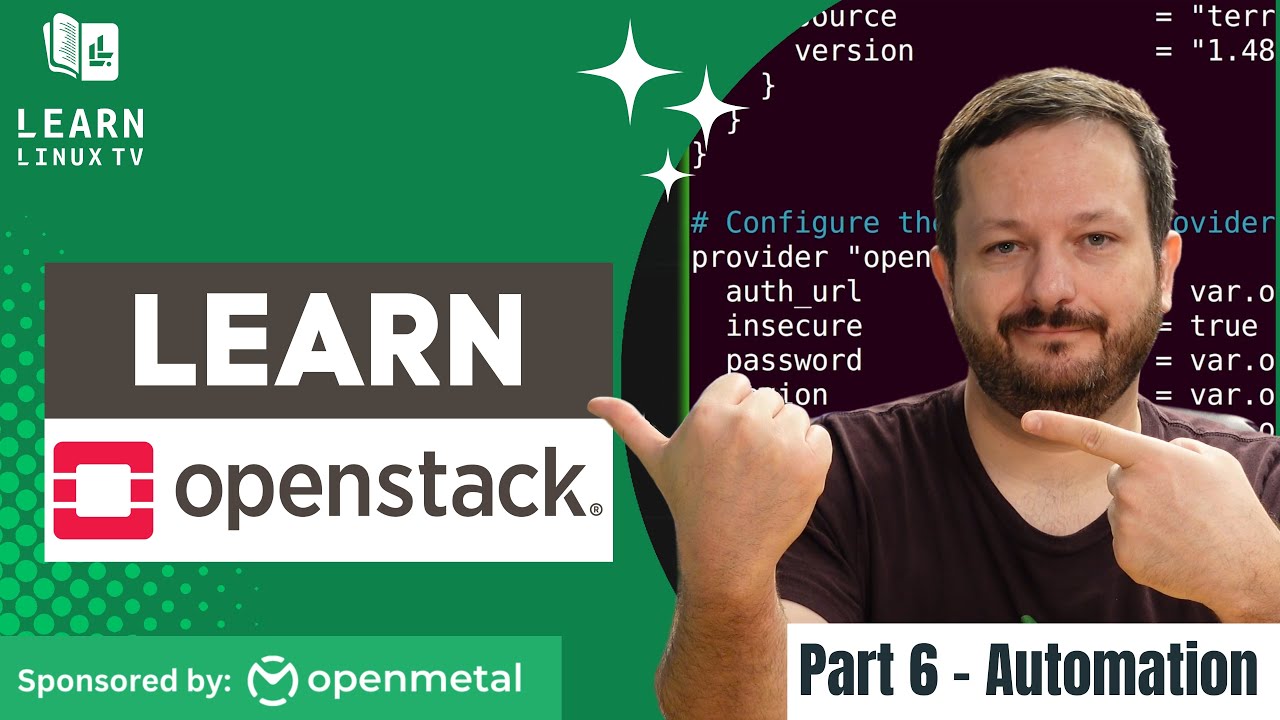
OpenStack is an open-source cloud computing platform that enables you to build your very own private cloud that is completely under your control. You can use it to spin up compute instances, set up block and object storage, load balancers, software-defined networking, and more. In this six-part guide, Jay will guide you through the finer points of OpenStack with hands-on examples. In the second episode, we’ll explore the process of creating compute instances.
Thanks to OpenMetal for sponsoring this series! Check out their OpenStack platform here.
If you’re looking for a web app or service to assist with keeping track of all your source code, then Gitlab is definitely something you should consider. Gitlab is more than just a front-end to Git, it actually contains quite a few features to empower software development. In this video, Jay will walk you through setting up your very own Gitlab server with Ubuntu on Linode.
Thanks to Linode for sponsoring today’s video. Check them out and get set up with $100 in credit toward your new account!
In this video for new Linux users, Jay covers the essential first tweaks that should made to every new Linux server build. Although these first tweaks may seem a bit “basic”, don’t underestimate their importance! A little preparation goes a long way.
With the Linux Crash Course series, we’ll go over one important Linux-related topic – one video at a time. This time around, here’s a video for those of you that are brand-new to Linux that will cover how to connect to a Linux server via the OpenSSH client.
In the Linux Crash Course series, you’ll learn all about a Linux-related topic – one video at a time. In this episode, we explore desktop environments. What are they? How do they differ from Window Managers? Why are there so many of these? Answers to those questions (and more) in this episode of the Linux Crash Course!
OpenStack is an open-source cloud computing platform that enables you to build your very own private cloud that is completely under your control. You can use it to spin up compute instances, set up block and object storage, load balancers, software-defined networking, and more. In this six-part guide, Jay will guide you through the finer points of OpenStack with hands-on examples. In the first episode of the series, we’ll go over a series introduction and outline. In addition, an overview Horizon (the OpenStack dashboard) is covered.
Thanks to OpenMetal for sponsoring this series and making it possible. Check out OpenMetal for your very own on-demand OpenStack cloud!
What exactly is a “distribution” of Linux and why are there so many? In this video, new Linux users will discover what exactly makes up a distro. In addition, a few example Linux distributions are shown, such as Fedora, Ubuntu, and a few more.
The bat command is a clone of the cat command, but with wings! This tool can be used similarly as the cat command, but it includes additional features such as syntax highlighting, line numbers, and more! In this video, you’ll see the bat command in action.
NFS (Network File System) is a fantastic way to share files between Linux and UNIX machines. In this video, Jay walks you through the process of setting up an NFS server on Ubuntu, complete with a walkthrough on mounting the exports. Not only that, you’ll see how you can utilize AutoFS for on-demand mounting as well.
Were you every confused regarding the differences and use-cases between a hostname and domain name for a device within your network? How does naming your servers benefit you? In this latest episode of the Linux Crash Course series, we’ll explore some foundational concepts around both.
System76, a company that focuses on Linux-first computers, designs keyboards now. The Launch Keyboard “launched” some time ago, and for some of you the lack of a numpad was a concern. Now, the “Heavy” variation of the Launch mechanical keyboard is available – and yes, it’s a full keyboard complete with a numpad. In this video, Jay will give you his thoughts on the latest input device from System76.
Check out the Launch Keyboard lineup here (no commission earned).
Every computer needs an operating system – and the Raspberry Pi is no different. Primarily, the Raspberry Pi boots from an SD card. But how do you write an operating system to that SD card? Well, if you’re just starting out – then this is the video for you!